
Travel
Why travel matters in Powys
Travel is essential to life in Powys — but it is also one of our biggest climate challenges.
Transport accounts for around 21% of Powys’ total carbon footprint, making it one of the largest sources of emissions in the county.
Transport emissions per resident are approximately 22% higher than the UK average. Powys is geographically large and predominantly rural. With long distances between towns and villages, many residents rely heavily on private cars for everyday journeys.
This data underlines both the scale of the challenge and the need for solutions tailored to rural areas.
Travel as a climate and well-being solution
Transport in Powys is not just about carbon — it is about access, well-being and fairness.
Powys is the least densely populated county in Wales, with just 26 people per square kilometre. This compares to: 149 people per km² across Wales and 274 people per km² across the UK.
Lower population density makes conventional public transport more difficult to provide. Many people depend on private cars simply because there are few alternatives.
This creates challenges including:
- Transport poverty
- Social isolation
- Barriers to accessing healthcare, education and employment
Over 60% of community transport journeys in Wales are health-related, highlighting how vital transport is for accessing NHS and well-being services.
Making low-carbon travel convenient and affordable is more effective than asking people to change without alternatives. Sustainable travel focuses on creating a transport system that is:
- Lower carbon
- Affordable
- Accessible
- Designed around rural realities
Sustainable travel is not only about how people travel, but also about where services are located and how easily people can access everyday needs. Planning, land use and transport must work together.
Shaping Powys’ future
Sustainable travel works when alternatives are practical, reliable and affordable. In a rural county, reducing emissions depends on better infrastructure, planning and shared solutions — not simply asking individuals to change behaviour without support.
Making progress at pace will involve:
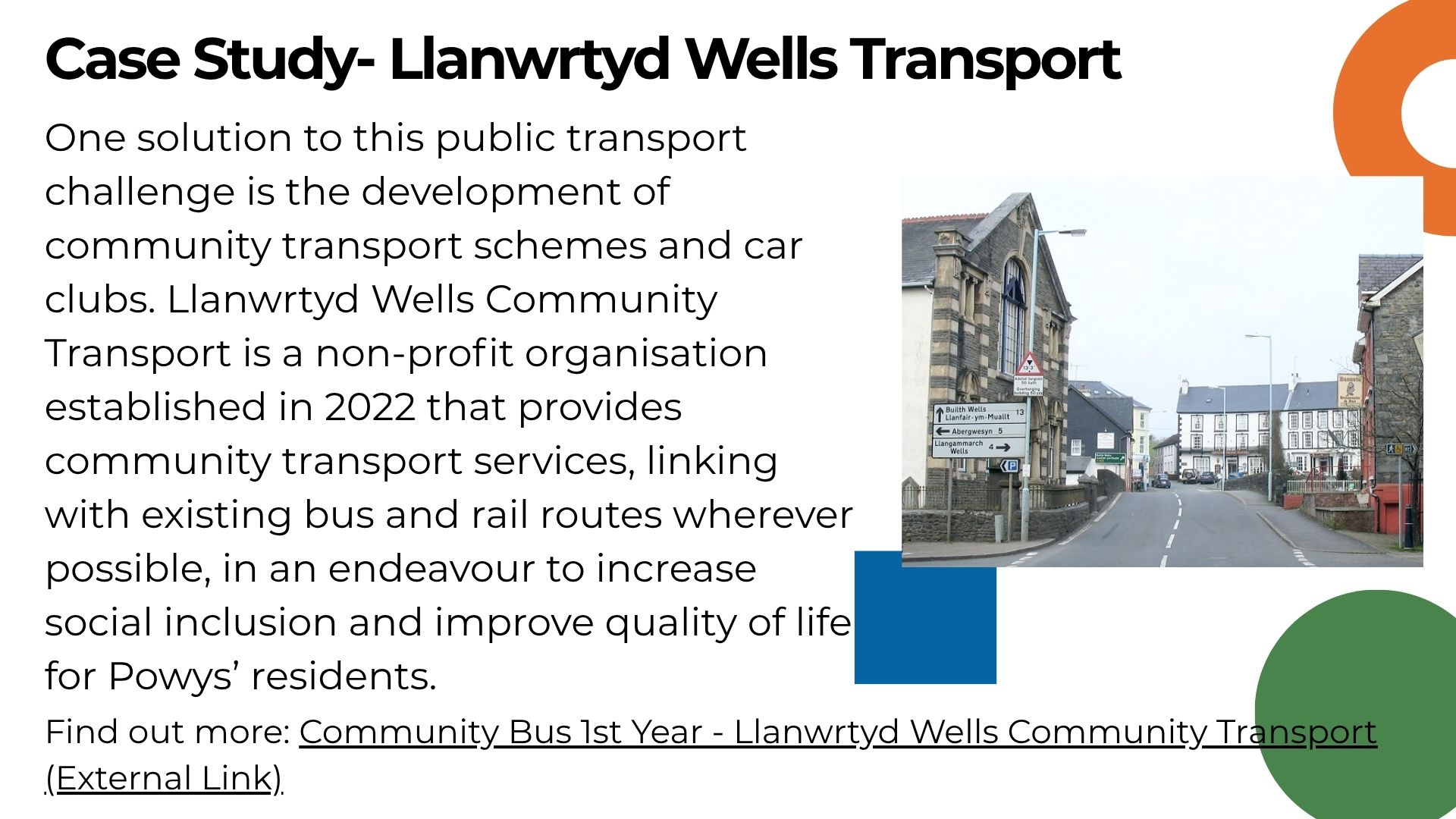
- Expanding community and shared transport so people can get to healthcare, education and services without a car
- Making it easier to choose lower-carbon travel by improving reliability, affordability and information
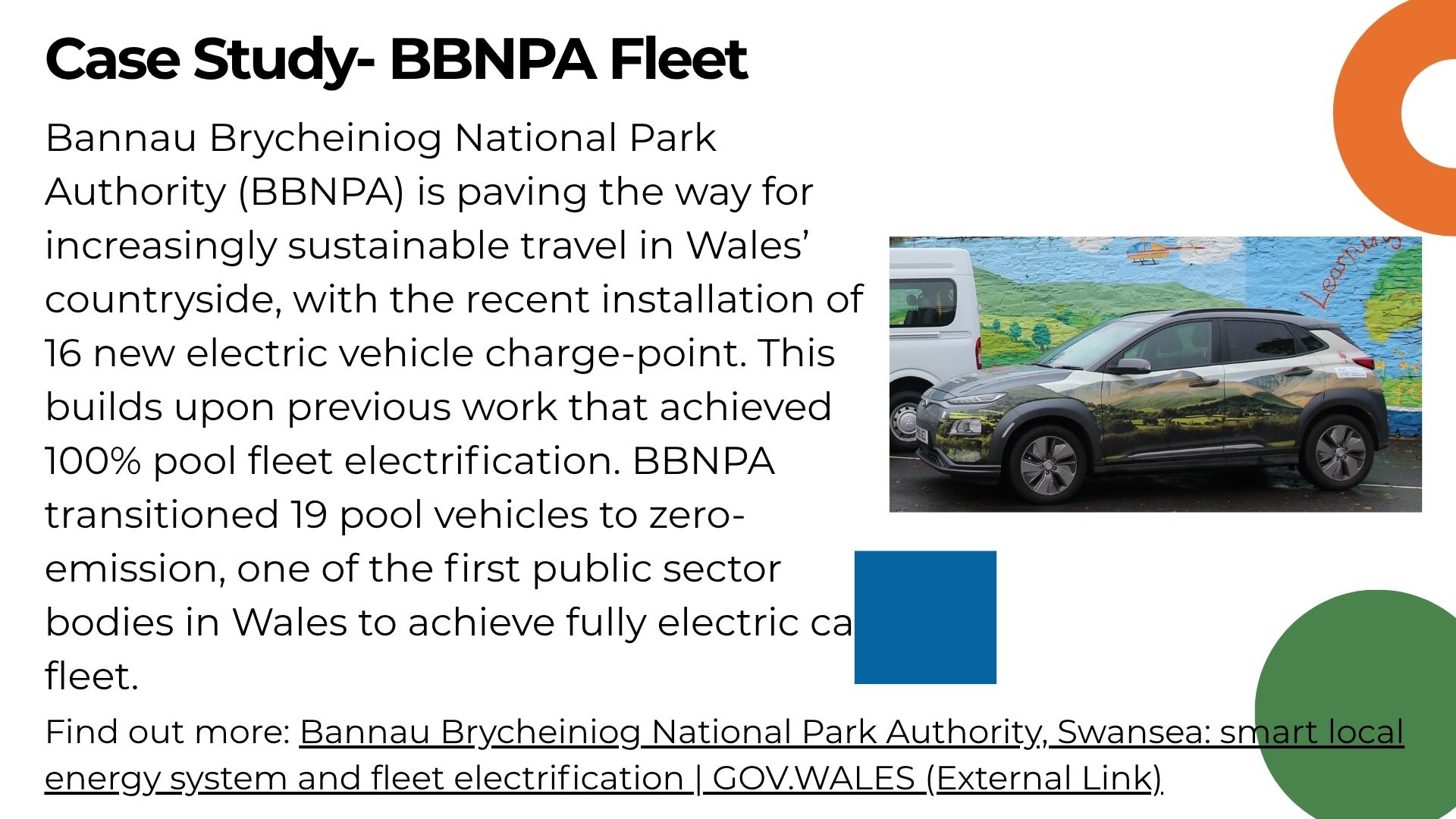
- Supporting a gradual shift to lower-emission vehicles, alongside charging infrastructure where it’s needed
- Creating safer options for walking, wheeling and cycling in places where it’s practical and valued
- Reducing the need to travel long distances by improving local access to services through joined-up planning
The goal is to make low-carbon and resilient travel options the easy, affordable choice — backed by investment and services.
Public bodies in Powys support sustainable travel through transport planning, service location decisions, fleet management and investment in community and shared transport solutions tailored to rural needs.
Unlocking sustainable travel in Powys
Innovative transport projects across Powys are already demonstrating what is possible.
TrydaNi
TrydaNi is a community-owned electric car-sharing network operating across Wales. It provides affordable, low-carbon transport alternatives, particularly in rural areas where car dependency is high. Vehicles can be booked through an app and are available in multiple locations across Wales, with further expansion underway.
Find out more: TrydaNi Car Clubs | Community car sharing across Wales (External Link)
Evidence-led action
Evidence is helping public services, businesses and communities focus effort where it will make the most difference.
Powys’ carbon footprint
You can explore the full detail of Powys’ carbon footprint, including in relation to travel, in the Powys County: Carbon Baseline and Climate Transition.
Read the full report here: Small World Consulting Report
Community and shared transport in Powys
The Community and Shared Transport in Powys Report explores how shared transport systems could expand across the county.
The study identifies barriers to adoption and provides recommendations aligned with:
- Welsh Government transport decarbonisation goals
- The Well-being of Future Generations (Wales) Act
It considers options such as car-sharing clubs and community-led mobility services to reduce emissions while improving access.
Read the full report here: Community and shared transport in Powys Report (External Link)
