Climate Risks To Powys

Share Climate Risks To Powys on Facebook Share Climate Risks To Powys on Twitter Share Climate Risks To Powys on Linkedin Email Climate Risks To Powys link

Why climate risk matters to Powys now

Climate change is already affecting daily life in Powys. Weather patterns are becoming less predictable, with more frequent flooding, storms, heatwaves and drought.

These impacts disrupt travel, affect farms and businesses, place pressure on health and care services, and damage the landscapes and ecosystems that support well-being.

To understand what this means locally, Powys Public Services Board (PSB) partners have completed Powys’ first Climate Change Risk Assessment (CCRA). It brings together climate science, local data and insight from communities, organisations and specialists across Powys.

The big picture – what the evidence shows

Evidence shows Powys’ climate is changing. Powys is experiencing:

  • Hotter, drier summers with increased heatwave and wildfire risk
  • Warmer, wetter winters with heavier rainfall and flooding
  • More intense storms, disrupting services and damaging infrastructure
  • Longer dry spells, increasing pressure on water supplies
  • Shifting seasons, affecting farming, nature and outdoor work

These trends are projected to intensify over coming decades.

What we are already seeing

Climate change is not a distant issue. Communities, services and landscapes across Powys are already experiencing its effects.

Storms and flooding

Recent storms have repeatedly blocked key routes such as the A470 and A458, isolating communities and disrupting access to schools, healthcare and workplaces. Towns including Crickhowell, Builth Wells, Machynlleth, Llanidloes and Welshpool have experienced repeated flooding. Storms such as Arwen and Eunice caused widespread power cuts, leaving rural households without heating, lighting or communication.

Wildfire

Between April and October 2025, Mid and West Wales Fire and Rescue Service attended 164 wildfire incidents across Mid Wales. Fires affected grasslands, moorlands and forestry, including large incidents near Machynlleth and Llangorse, placing pressure on emergency services and damaging natural habitats.

Heat and drought

During the 2022 heatwave, Powys recorded temperatures of around 37°C under the Met Office’s first red extreme heat warning. The Upper Severn entered drought status, river levels dropped significantly, and sections of the Wye and Usk were closed to fishing. Reservoir levels fell sharply, leading to hosepipe restrictions and increased pressure on water supplies.

Climate projections indicate that exposure to heat, drought, storms and flooding will become more frequent and intense.

Shaping Powys' future

Climate resilience is built through practical, coordinated action — and it works best when it feels fair and makes everyday life safer and more secure. In Powys, that means organisations and communities working together so people aren’t left to face climate risks alone.

Building climate resilience in Powys will include:

  • Planning for climate risks across organisations, so roads, power, water, health and emergency services are prepared together
  • Protecting communities from flooding, heat and wildfire through prevention, maintenance and early action
  • Strengthening local preparedness (community networks, communications, and support for vulnerable residents)
  • Improving the evidence base through shared data, monitoring and learning, so action stays targeted and effective
  • Investing in nature-based solutions and resilient infrastructure that reduce long-term disruption and costs

Public bodies support climate resilience by embedding climate risk into planning, asset management, emergency preparedness and service delivery, coordinating action across infrastructure, health, transport and community safety.

Action is already underway across public services, communities and local partners — these examples show how resilience is being built in practice.
Case Study

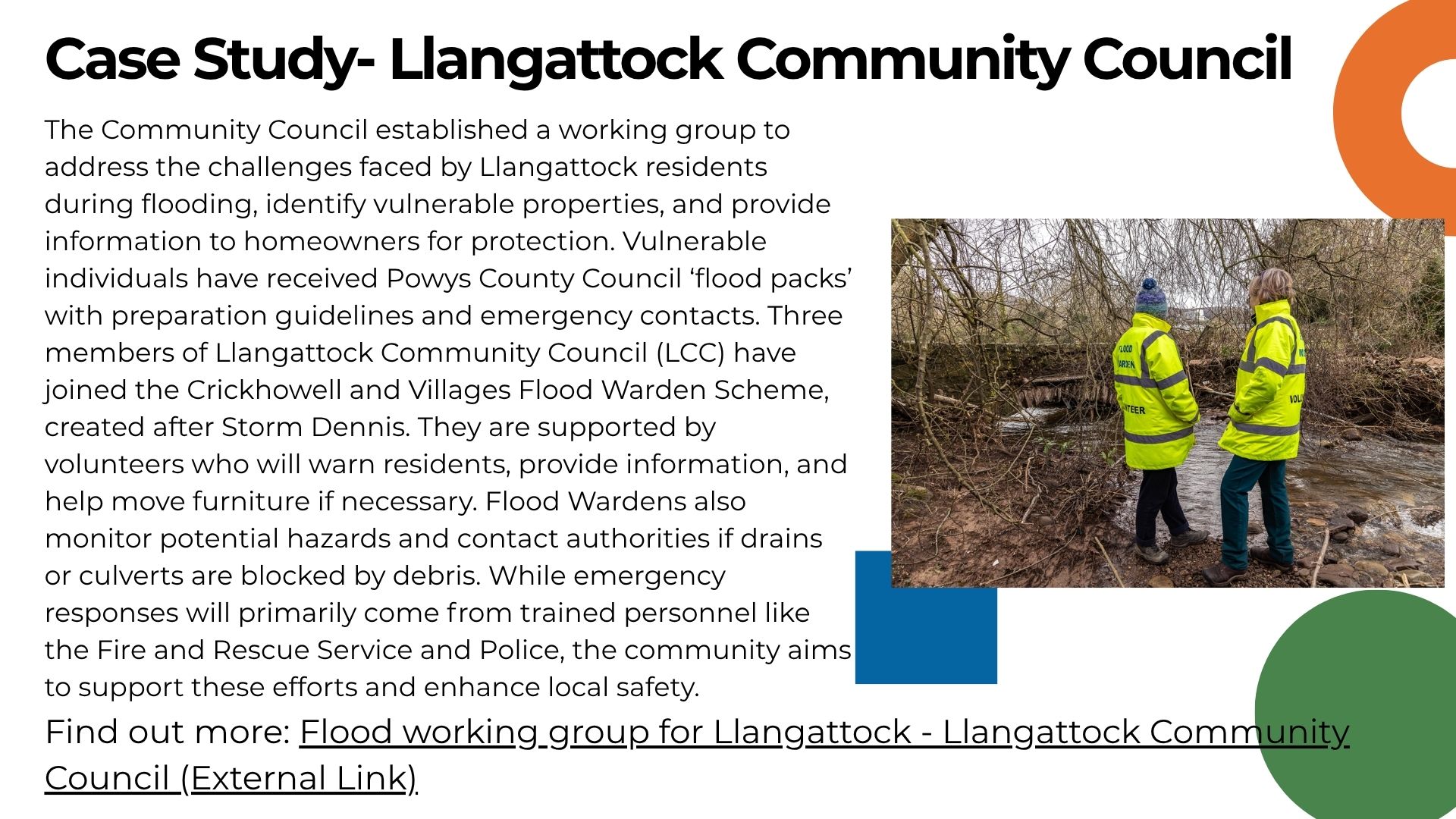
The Community Council established a working group to address the challenges faced by Llangattock residents during flooding, identify vulnerable properties, and provide information to homeowners for protection. Vulnerable individuals have received Powys County Council ‘flood packs’ with preparation guidelines and emergency contacts. Three members of Llangattock Community Council (LCC) have joined the Crickhowell and Villages Flood Warden Scheme, created after Storm Dennis. They are supported by volunteers who will warn residents, provide information, and help move furniture if necessary. Flood Wardens also monitor potential hazards and contact authorities if drains or culverts are blocked by debris. While emergency responses will primarily come from trained personnel like the Fire and Rescue Service and Police, the community aims to support these efforts and enhance local safety.


Find out more here: Flood working group for Llangattock - Llangattock Community Council (External Link)


Evidence led action

Evidence is helping public services, businesses and communities focus effort where it will make the most difference.

Powys climate risk assessment

Powys’ Climate Change Risk Assessment examines risks across four interconnected sectors:

• Land, nature and agriculture
• Health, well-being and communities
• Economy and supply chains
• Infrastructure and essential services

It shows that climate risks in Powys are interconnected. A single event — such as a major storm or heatwave — can cascade across transport, health services, businesses and ecosystems.

The assessment identifies six systemic risks that no single organisation can manage alone:

  1. Interdependent infrastructure and service failures
    Disruption to roads, power, digital networks and essential services.
  2. Flood impacts on settlements and economic centres
    Repeated flooding affecting homes, businesses and community life.
  3. Heat, wildfire and air quality pressures
    Rising health risks and pressure on services during hotter, drier periods.
  4. Water security and drought
    Increased strain on public water supply, farming and ecosystems.
  5. Food and supply chain fragility
    Vulnerability of rural supply routes and essential goods.
  6. Nature and land degradation
    Soil loss, habitat decline and reduced natural flood protection.

Unlocking climate resilience action across Powys

Public Service Board action

The Climate Change Risk Assessment sets out five pillars for coordinated, long-term resilience across Powys. They provide a practical framework for how public services organisations can manage shared risks while integrating action into existing plans and governance.

  1. Shared climate risk management
    A consistent county-wide approach to identifying and prioritising risks, including embedding climate risk into organisational planning and maintaining PSB oversight of shared systemic risks.
  2. Ownership and governance
    Clear accountability for managing systemic risks, with governance arrangements that support coordination across sectors.
  3. Evidence, data and learning
    Better use of data, monitoring and lived experience to improve decisions over time — focused on practical learning rather than extra bureaucracy.
  4. Collaboration and system resilience
    Joint planning to manage cascading risks across transport, health, infrastructure and the economy, including stronger links with partners such as the Local Resilience Forum.
  5. Communication and engagement
    Clear communication to build shared understanding and maintain momentum, embedding resilience into everyday practice rather than treating it as a standalone programme.

You can explore the full detail — including supporting actions under each pillar — in Part D of the Climate Change Risk Assessment.

Dyfed Powys local resilience forum

Local Resilience Forums bring together all responder organisations that have a duty to co-operate under the Civil Contingencies Act.

Civil Contingencies | Dyfed-Powys Police (External Link)


Why climate risk matters to Powys now

Climate change is already affecting daily life in Powys. Weather patterns are becoming less predictable, with more frequent flooding, storms, heatwaves and drought.

These impacts disrupt travel, affect farms and businesses, place pressure on health and care services, and damage the landscapes and ecosystems that support well-being.

To understand what this means locally, Powys Public Services Board (PSB) partners have completed Powys’ first Climate Change Risk Assessment (CCRA). It brings together climate science, local data and insight from communities, organisations and specialists across Powys.


The big picture – what the evidence shows

Evidence shows Powys’ climate is changing. Powys is experiencing:

  • Hotter, drier summers with increased heatwave and wildfire risk
  • Warmer, wetter winters with heavier rainfall and flooding
  • More intense storms, disrupting services and damaging infrastructure
  • Longer dry spells, increasing pressure on water supplies
  • Shifting seasons, affecting farming, nature and outdoor work

These trends are projected to intensify over coming decades.

What we are already seeing

Climate change is not a distant issue. Communities, services and landscapes across Powys are already experiencing its effects.

Storms and flooding

Recent storms have repeatedly blocked key routes such as the A470 and A458, isolating communities and disrupting access to schools, healthcare and workplaces. Towns including Crickhowell, Builth Wells, Machynlleth, Llanidloes and Welshpool have experienced repeated flooding. Storms such as Arwen and Eunice caused widespread power cuts, leaving rural households without heating, lighting or communication.

Wildfire

Between April and October 2025, Mid and West Wales Fire and Rescue Service attended 164 wildfire incidents across Mid Wales. Fires affected grasslands, moorlands and forestry, including large incidents near Machynlleth and Llangorse, placing pressure on emergency services and damaging natural habitats.

Heat and drought

During the 2022 heatwave, Powys recorded temperatures of around 37°C under the Met Office’s first red extreme heat warning. The Upper Severn entered drought status, river levels dropped significantly, and sections of the Wye and Usk were closed to fishing. Reservoir levels fell sharply, leading to hosepipe restrictions and increased pressure on water supplies.

Climate projections indicate that exposure to heat, drought, storms and flooding will become more frequent and intense.

Shaping Powys' future

Climate resilience is built through practical, coordinated action — and it works best when it feels fair and makes everyday life safer and more secure. In Powys, that means organisations and communities working together so people aren’t left to face climate risks alone.

Building climate resilience in Powys will include:

  • Planning for climate risks across organisations, so roads, power, water, health and emergency services are prepared together
  • Protecting communities from flooding, heat and wildfire through prevention, maintenance and early action
  • Strengthening local preparedness (community networks, communications, and support for vulnerable residents)
  • Improving the evidence base through shared data, monitoring and learning, so action stays targeted and effective
  • Investing in nature-based solutions and resilient infrastructure that reduce long-term disruption and costs

Public bodies support climate resilience by embedding climate risk into planning, asset management, emergency preparedness and service delivery, coordinating action across infrastructure, health, transport and community safety.

Action is already underway across public services, communities and local partners — these examples show how resilience is being built in practice.

Case Study

The Community Council established a working group to address the challenges faced by Llangattock residents during flooding, identify vulnerable properties, and provide information to homeowners for protection. Vulnerable individuals have received Powys County Council ‘flood packs’ with preparation guidelines and emergency contacts. Three members of Llangattock Community Council (LCC) have joined the Crickhowell and Villages Flood Warden Scheme, created after Storm Dennis. They are supported by volunteers who will warn residents, provide information, and help move furniture if necessary. Flood Wardens also monitor potential hazards and contact authorities if drains or culverts are blocked by debris. While emergency responses will primarily come from trained personnel like the Fire and Rescue Service and Police, the community aims to support these efforts and enhance local safety.


Find out more here: Flood working group for Llangattock - Llangattock Community Council (External Link)


Evidence led action

Evidence is helping public services, businesses and communities focus effort where it will make the most difference.

Powys climate risk assessment

Powys’ Climate Change Risk Assessment examines risks across four interconnected sectors:

• Land, nature and agriculture
• Health, well-being and communities
• Economy and supply chains
• Infrastructure and essential services

It shows that climate risks in Powys are interconnected. A single event — such as a major storm or heatwave — can cascade across transport, health services, businesses and ecosystems.

The assessment identifies six systemic risks that no single organisation can manage alone:

  1. Interdependent infrastructure and service failures
    Disruption to roads, power, digital networks and essential services.
  2. Flood impacts on settlements and economic centres
    Repeated flooding affecting homes, businesses and community life.
  3. Heat, wildfire and air quality pressures
    Rising health risks and pressure on services during hotter, drier periods.
  4. Water security and drought
    Increased strain on public water supply, farming and ecosystems.
  5. Food and supply chain fragility
    Vulnerability of rural supply routes and essential goods.
  6. Nature and land degradation
    Soil loss, habitat decline and reduced natural flood protection.

Unlocking climate resilience action across Powys

Public Service Board action

The Climate Change Risk Assessment sets out five pillars for coordinated, long-term resilience across Powys. They provide a practical framework for how public services organisations can manage shared risks while integrating action into existing plans and governance.

  1. Shared climate risk management
    A consistent county-wide approach to identifying and prioritising risks, including embedding climate risk into organisational planning and maintaining PSB oversight of shared systemic risks.
  2. Ownership and governance
    Clear accountability for managing systemic risks, with governance arrangements that support coordination across sectors.
  3. Evidence, data and learning
    Better use of data, monitoring and lived experience to improve decisions over time — focused on practical learning rather than extra bureaucracy.
  4. Collaboration and system resilience
    Joint planning to manage cascading risks across transport, health, infrastructure and the economy, including stronger links with partners such as the Local Resilience Forum.
  5. Communication and engagement
    Clear communication to build shared understanding and maintain momentum, embedding resilience into everyday practice rather than treating it as a standalone programme.

You can explore the full detail — including supporting actions under each pillar — in Part D of the Climate Change Risk Assessment.

Dyfed Powys local resilience forum

Local Resilience Forums bring together all responder organisations that have a duty to co-operate under the Civil Contingencies Act.

Civil Contingencies | Dyfed-Powys Police (External Link)


Page published: 27 Mar 2026, 04:29 PM